Bleeding that soaks protection hourly, lasts beyond seven days or disrupts work and sleep deserves more than a label of “normal periods.” You will learn how to identify possible fibroid-related bleeding, recognise anaemia and emergencies, prepare for assessment, and compare treatment choices according to your health, fertility plans and access to follow-up care.
Key takeaways
- Seek urgent care if you soak a pad hourly for several hours or feel faint.
- Bring bleeding records, scan reports, medicines, and pregnancy plans to your assessment.
- Compare medicines, uterine artery embolisation, myomectomy, and hysterectomy with your goals.
- Arrange follow-up before travelling, especially after a procedure or with anaemia symptoms.
When Heavy Bleeding Points to Fibroids—or Something Else
Heavy periods from fibroids are clinically significant when bleeding soaks a pad or tampon about every hour for several consecutive hours, produces clots larger than a 2.5 cm coin, lasts beyond seven days, floods clothes or bedding, or interrupts work or sleep.
Fibroids and heavy menstrual bleeding often occur together, but bleeding volume alone cannot identify the cause.
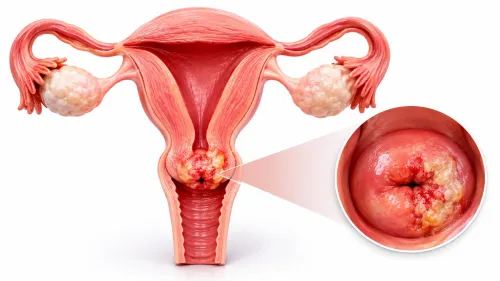
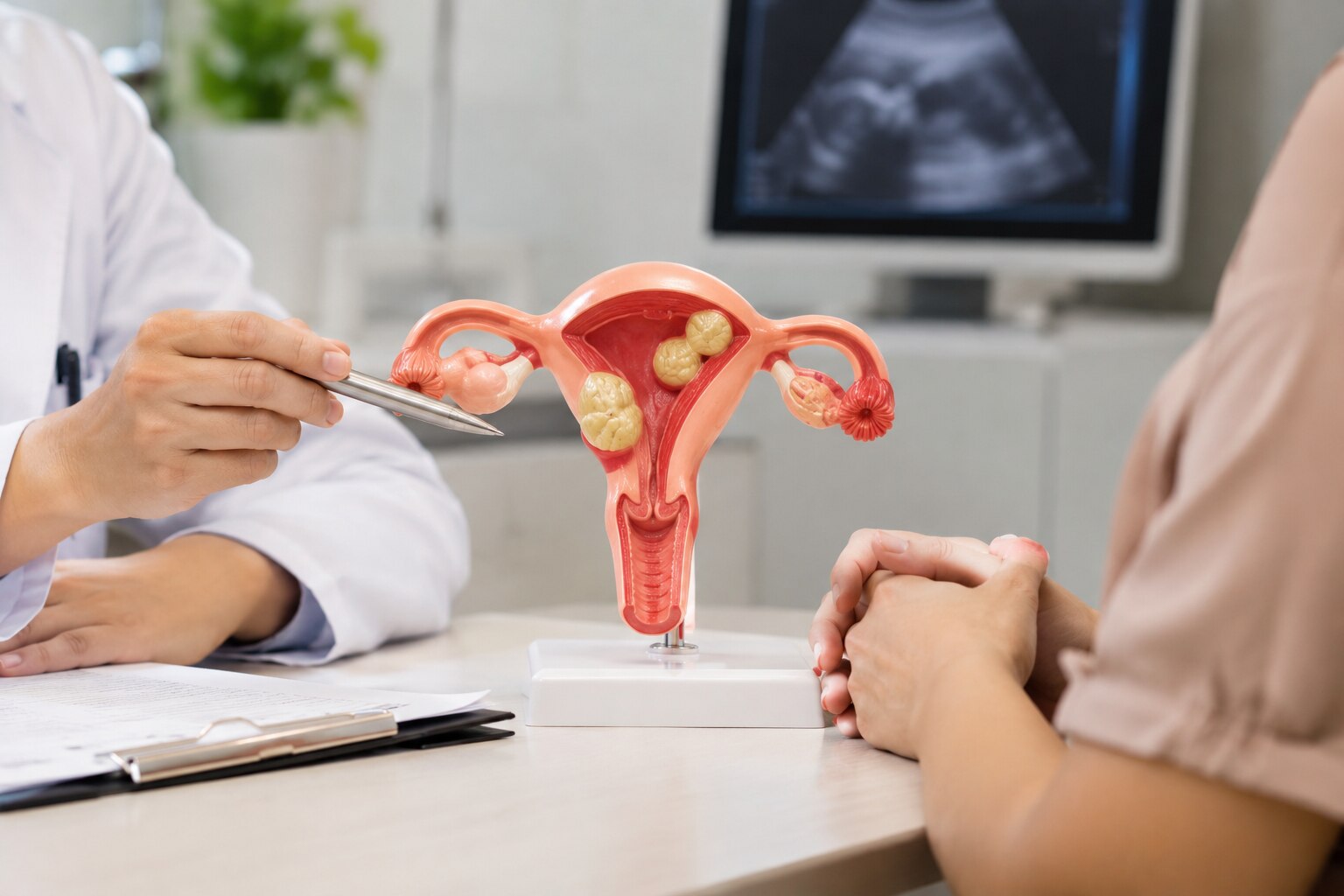
1. Fibroid location matters more than size alone. Submucosal fibroids bulge into the uterine cavity and are more likely to cause bleeding than a larger fibroid outside the cavity. Intramural fibroids enlarge the uterine wall; the number and position of all fibroids also influence symptoms.
2. A gynaecologist for fibroid bleeding must also consider adenomyosis, endometrial polyps, thyroid disease, bleeding disorders, medication effects, pregnancy complications and perimenopause. New or rapidly worsening bleeding after menopause needs prompt assessment; do not attribute it to fibroids without evaluation.
3. Prolonged blood loss can cause iron-deficiency anaemia. Watch for fatigue, headaches, paleness, dizziness, hair loss, restless legs and shortness of breath.
4. Seek emergency care for fainting, severe dizziness, marked weakness, breathlessness, chest pain, rapid pad soaking, or heavy bleeding with a positive pregnancy test. These signs need urgent assessment, not a routine appointment.
What Your Assessment Should Include—and What to Bring
A practical work-up for fibroid care for heavy periods in Mumbai starts with your bleeding pattern, pregnancy possibility and treatment goals—not the ultrasound alone.
1. Record menstrual dates, bleeding duration, flooding, clot size, pain, pregnancy history and pregnancy plans. Review contraception and every medicine, including aspirin, anticoagulants and non-prescription products. Have a pelvic examination when symptoms or examination findings make it useful.
2. Request a complete blood count, including haemoglobin, to check for anaemia. Ask about ferritin or other iron studies when fatigue, breathlessness, hair loss or restless legs suggest depleted iron stores. Pregnancy testing is important before some medicines and imaging.
3. Pelvic ultrasound is usually the first scan. During a transvaginal ultrasound, the clinician covers a narrow probe and inserts it into the vagina to obtain closer views of the uterus and uterine cavity; a transabdominal scan through the lower abdomen may also be used.
Saline infusion sonography outlines a cavity-distorting fibroid or polyp, while hysteroscopy provides direct viewing and possible treatment inside the cavity. MRI is reserved for selected cases, such as complex mapping before surgery or uterine-artery embolisation.
4. Bring a bleeding diary, pad or tampon counts, clot sizes, pain record, pregnancy plans, previous scan images and reports, blood tests, and a complete medicine list.
Ask for the haemoglobin result; each fibroid’s location, size and number; whether imaging was transabdominal or transvaginal; whether the cavity was assessed; the follow-up interval; and symptoms needing urgent review. This supports safer fibroid symptom treatment in Mumbai.
How Fibroid Bleeding Treatment Choices Compare
Mild bleeding with normal haemoglobin and iron stores can justify observation with a planned review. Watchful waiting is a poor fit when anaemia persists, bleeding escalates, pain or pressure develops, the uterus enlarges rapidly, or daily life is disrupted.
For fibroid symptom treatment in Mumbai, compare bleeding severity, haemoglobin, ferritin, fibroid location, age, contraception needs, pregnancy intentions and treatment preferences—not size alone.
| Option | Main role | Key trade-off |
|---|---|---|
| Tranexamic acid | Taken on heavy-bleeding days | Reduces bleeding but does not shrink fibroids |
| NSAIDs | Helps bleeding and period pain | Not suitable for everyone |
| Combined contraception, cyclical progestogens or levonorgestrel intrauterine system | Bleeding control; contraception where appropriate | Cavity distortion, medical history and pregnancy plans affect suitability; these do not all shrink fibroids |
| GnRH agonist or oral GnRH-antagonist regimen | Temporary bleeding and volume reduction | Discuss hot flushes, bone effects, add-back hormones, treatment duration and local availability |
| Hysteroscopic removal | Removes a cavity-distorting submucosal fibroid | Best suited to fibroids projecting into the uterine cavity |
| Myomectomy | Removes fibroids while preserving the uterus | Recurrence, blood loss and adhesions remain possible |
| Uterine-artery embolisation | Blocks fibroid blood flow without removing the uterus | Fertility outcomes are less predictable |
| Hysterectomy | Definitive treatment | Major surgery and ends the ability to carry a pregnancy |
Iron replaces depleted iron; it does not stop heavy periods from fibroids. Start it without checking the cause, and diagnosis can be delayed. GnRH treatment is usually temporary or a bridge to surgery. Review the ultrasound images, not just the report, before choosing.
How Pregnancy Plans and Follow-Up Change the Decision
Controlling fibroids and heavy menstrual bleeding is not automatically the same as choosing the best fertility plan. Before treatment, tell a gynaecologist for fibroid bleeding about possible pregnancy, contraception, desired pregnancy timing, previous infertility, miscarriages and every medicine, including aspirin and anticoagulants.
| Option | Pregnancy planning point | Key concern |
|---|---|---|
| Hormonal medication | Can reduce bleeding and provide contraception | Suitability changes if pregnancy is planned soon |
| GnRH treatment | Temporarily reduces bleeding and fibroid volume | Discuss duration, hot flushes, bone effects and add-back hormones |
| Uterine-artery embolisation | Preserves the uterus | Fertility outcomes are less predictable than after myomectomy |
| Myomectomy | Removes selected fibroids while retaining the uterus | Discuss recurrence, blood loss, adhesions and recovery |
Location matters more than size alone. A smaller submucosal fibroid distorting the cavity may affect bleeding or conception more than a larger intramural or outer-surface fibroid.
Request fertility-specialist input for infertility, repeated miscarriage, cavity distortion or any procedure that could affect a future pregnancy. After treatment, review bleeding patterns, haemoglobin, ferritin or other iron measures, side effects, pain and pressure symptoms; repeat imaging when the cavity relationship remains unclear or symptoms persist.
- Accepting disabling bleeding as normal or relying only on painkillers.
- Starting iron without confirming deficiency or investigating its cause.
- Delaying care because fibroids are benign.
- Choosing a procedure because it helped a friend.
Change or escalate treatment when bleeding persists, anaemia continues or imaging has not clearly shown whether the cavity is involved.
How to Choose Fibroid Care in Mumbai and Act Safely While Travelling
Choose fibroid care for heavy periods in Mumbai by comparing access and follow-up, not by treating any neighbourhood as proof of better outcomes.
| Factor | What to check |
|---|---|
| Clinician access | Appointment availability, medication reviews and continuity with the same gynaecologist for fibroid bleeding |
| Testing | Pelvic ultrasound, image review, complete blood count, haemoglobin and iron testing |
| Hospital support | Referral pathway, procedure facilities and a named emergency arrangement |
| Travel | Realistic door-to-door time through Mumbai traffic, including return travel after a procedure |
Ask for a written estimate covering consultation, imaging, laboratory tests, medicines and any procedure. Total cost and effort depend on the treatment plan, not the fibroid label.
Ask the clinician to review the ultrasound images, not only the report, and explain which option treats a fibroid affecting the uterine cavity. Bring your bleeding diary, previous ultrasound images and reports, blood-test results, pregnancy plans and complete medicine list.
If choosing Dr.Vinisha Abhale -Obs & Gynaecologist, confirm how repeat scans, blood tests, referrals and urgent reviews are arranged.
Online or phone advice cannot assess severe blood loss. If you are soaking pads rapidly, faint, breathless, have chest pain or feel severely weak, go to an emergency department instead of travelling to a routine appointment; bring your medicines and recent reports if safe.
Set a follow-up date linked to symptom relief, anaemia correction, fertility goals and treatment review.
Related service
Fibroids Fibroids Uterine Fibroids Treatment by Dr. Vinisha Abhale Uterine fibroids are non-cancerous growths that develop in or around the uterus. |
Frequently asked questions
When do heavy periods suggest fibroids or another medical problem?
Heavy bleeding deserves assessment when it soaks a pad or tampon about every hour for several consecutive hours, produces clots larger than 2.5 cm, lasts beyond seven days, floods clothing or bedding, or disrupts work and sleep. Fibroids are one possible cause; pregnancy-related problems, adenomyosis, polyps, thyroid disease, bleeding disorders, and endometrial conditions also need consideration.
What should you bring to a fibroid bleeding assessment?
Bring your bleeding record, the date of your last period, previous ultrasound or MRI reports, blood-test results, a list of medicines and supplements, previous treatment details, and information about pregnancy plans. Record pad or tampon use, clot size, bleeding duration, pain, dizziness, breathlessness, and fatigue.
How do fibroid bleeding treatments compare?
Medicines can reduce bleeding without removing fibroids, while procedures target the fibroid or its blood supply. Myomectomy removes fibroids and preserves the uterus; uterine artery embolisation blocks their blood supply; hysterectomy removes the uterus and ends periods and future pregnancy. The choice depends on fibroid size and location, anaemia, symptoms, overall health, and pregnancy plans.
How should you plan fibroid care in Mumbai if you are travelling?
Arrange an in-person assessment, confirm which scans and blood tests you need, and schedule follow-up before travelling. Ask about recovery time, warning signs, emergency contacts, medication instructions, and when you can safely fly or resume normal activity after treatment.
Keywords