The right prevention plan depends on your age, vaccination history, HPV risk, previous results and access to follow-up care. You will be able to compare testing and vaccination choices, prepare correctly, and select a Mumbai clinic that can manage an abnormal result from screening through treatment.
Key takeaways
- Persistent high-risk HPV can cause cervical cell changes before cancer develops.
- Choose HPV testing, Pap testing, or co-testing based on age and risk.
- An abnormal screening result does not mean you have cervical cancer.
- Ask about vaccination, follow-up intervals, and colposcopy before leaving your appointment.
How HPV leads to cervical cancer—and what prevention must cover
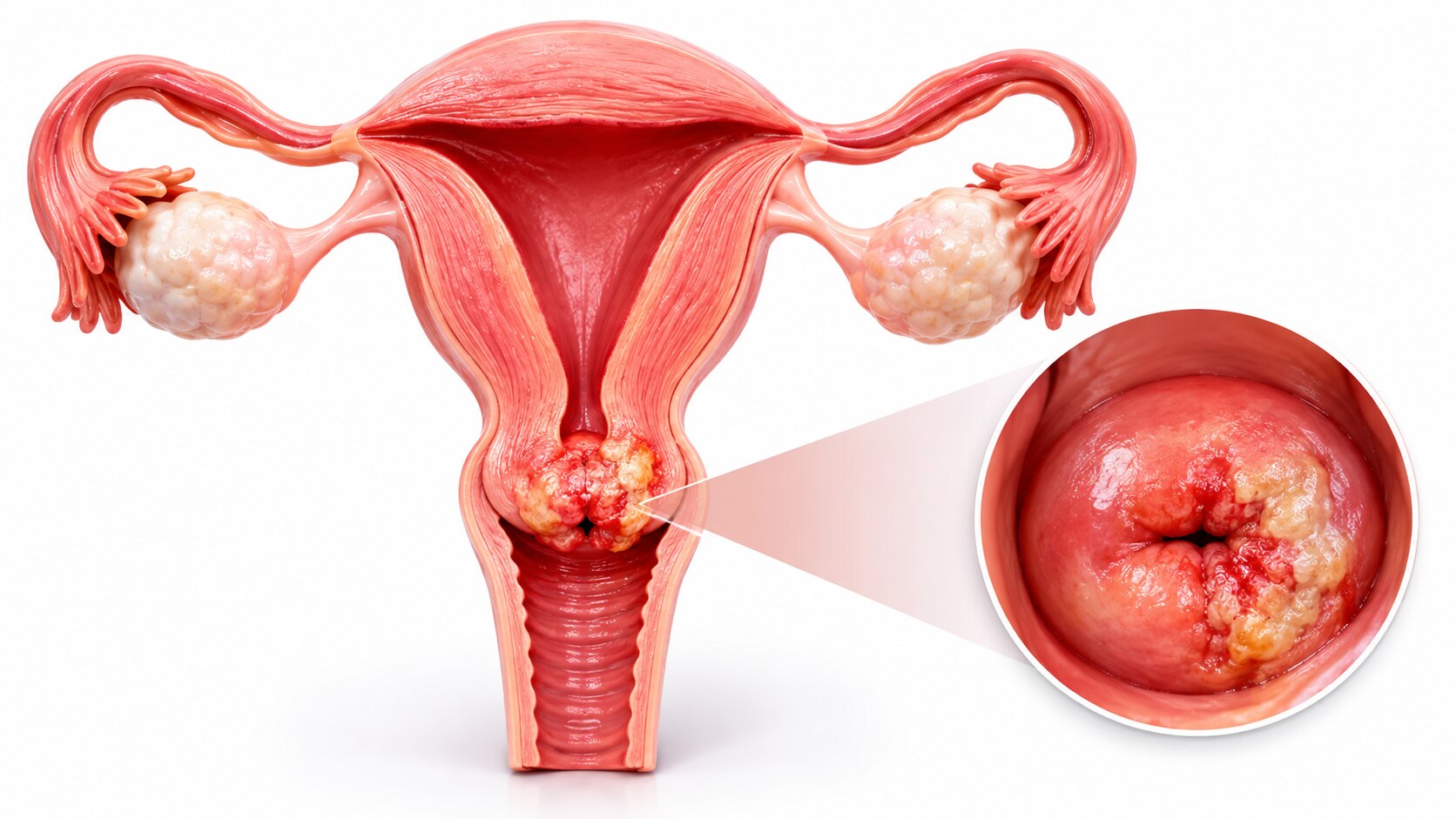
HPV, or human papillomavirus, spreads through sexual skin-to-skin contact and can pass without symptoms. Condoms reduce transmission, but they do not cover every exposed area. Most infections clear. When a high-risk type persists, it can alter cervical cells, leading to precancer and, over time, cancer.
1. Get HPV vaccination before exposure when possible. The vaccine prevents new infections; it does not clear existing HPV, precancer or cancer, and it does not replace later screening.
2. Follow age-appropriate screening with a cervical HPV test, Pap cytology, VIA or a clinician-recommended combination. Pap examines cervical cells, while HPV testing detects high-risk infection.
3. Stop smoking and prevent or treat HIV. Tobacco exposure and untreated immunosuppression make persistent HPV infection and progression more likely.
Screening is for people without symptoms. Bleeding after sex, bleeding after menopause, persistent unusual discharge, pelvic pain or pain during intercourse requires clinical examination, even after a recent normal result. A full-body check-up or pelvic ultrasound cannot replace cervical testing. Colposcopy investigates an abnormal screen, and biopsy confirms precancer or cancer when indicated.
For cervical cancer prevention in Mumbai, choose care that connects vaccination, screening and follow-up.
Which cervical test fits your age and risk profile?
For an average-risk woman, age 30 is a common starting point for primary HPV-DNA screening, repeated every 5 years when the result is negative under WHO-supported guidance. The best option changes with age, previous results and medical history.
| Option | What it answers | When it fits |
|---|---|---|
| Primary HPV-DNA | Detects high-risk HPV infection | Preferred screening method where available; commonly every 5 years after a negative result |
| Pap cytology | Finds abnormal cervical cells | An alternative protocol, commonly repeated every 3 years under the clinician’s guideline |
| Co-testing | Checks high-risk HPV and cervical cells | Provides both infection and cell-change results when the protocol recommends it |
| VIA | Shows acetowhite areas after acetic acid | Immediate, operator-dependent screening where laboratory testing is unavailable; a positive appearance is not a biopsy diagnosis |
| Colposcopy | Examines the cervix under magnification using acetic acid or iodine | Follow-up for an abnormal result, not routine screening |
VIA can support screen-and-treat care, but interpretation becomes harder when the transformation zone is not fully visible. When comparing cervix cancer tests in Mumbai, ask what happens after a positive result and whether colposcopy and biopsy are available.
Screening after 65 stops only after adequate recent negative results and no history requiring continued surveillance. HIV, organ transplantation, prolonged immunosuppressive treatment, previous high-grade precancer or cervical cancer requires an individualized schedule, not routine annual testing.
What happens before and after an abnormal screening result?
Before a Pap smear or HPV sample, follow the clinic’s specified interval for avoiding vaginal medicines and intercourse. Do not book during heavy menstrual bleeding, which can interfere with collection. Bring previous screening reports, HPV vaccination details and treatment records; these can change the next step.
1. After an HPV-positive result, ask whether the laboratory performed HPV genotyping and whether you need repeat testing, cytology triage or immediate colposcopy. HPV-positive does not mean cancer.
2. Attend colposcopy when advised. This magnified examination may lead to a cervical biopsy, and the biopsy determines whether there is no precancer, a low-grade change requiring surveillance, or a high-grade lesion requiring treatment.
3. If treatment is required, ask whether excision such as LEEP or another clinician-recommended procedure is appropriate.
4. Obtain a written report identifying your result, next appointment and responsible clinician. Do not rely on a message stating only that your sample was taken.
A previous abnormal result, high-grade precancer or incomplete follow-up means you should not return to routine screening without specialist advice. For cervical cancer prevention options in Mumbai, choose a service that explains the referral pathway rather than offering testing without a clear plan for colposcopy, biopsy and treatment.
How vaccination and life events change your prevention plan
Age 9–14 is the preferred time for HPV vaccination, before sexual exposure. WHO supports one or two doses at this age, two doses for ages 15–20, and three doses for people who are immunocompromised. Confirm the vaccine product, age cut-offs and catch-up availability during an HPV prevention consultation in Mumbai.
- If you are an adult who has not encountered every vaccine type, discuss vaccination; it can still add protection, although the benefit is smaller after exposure.
- Do not start an HPV vaccine series during pregnancy. Defer remaining doses until after pregnancy, and ask your clinician how breastfeeding affects timing for the selected product.
- After hysterectomy, ask whether the cervix was removed, why surgery occurred and whether you have had high-grade precancer; these details determine whether screening continues.
- Tell your obstetrician about pregnancy or recent childbirth before booking an examination. Pregnancy and the postpartum period can change when testing or treatment is appropriate.
- Continue screening after childbirth, vaccination or a previous abnormal result. The interval may change, but vaccination does not clear existing HPV, precancer or cancer and never replaces screening.
- If you have HIV, an organ transplant, prolonged immunosuppressive treatment, previous high-grade precancer or cervical cancer, request an individualized schedule rather than routine average-risk follow-up.
How to choose a cervical prevention service in Mumbai
Ask these questions before booking a cervical health clinic in Mumbai. A clinic that collects a sample but cannot explain follow-up offers incomplete prevention care.
| Service point | What to ask | Why it matters |
|---|---|---|
| Screening options | Do you offer primary HPV-DNA testing, Pap cytology, co-testing or VIA? | Each test answers a different question; VIA depends on trained visual assessment. |
| Laboratory | Which laboratory processes the sample, and does it hold recognised accreditation such as NABL accreditation? | You can verify where testing occurs and how quality is monitored. |
| Timing and report | How long do results take, and will I receive a written report in a clear format? | “Sample collected” is not a completed screening pathway. |
| Collection and privacy | Who collects the sample, how is it collected, and how are records and messages kept confidential? | You should know what to expect and who can access your result. |
| Clinical review | Will a doctor review the result, rather than sending only an automated message? | HPV-positive does not mean cancer; interpretation determines the next step. |
| Referral pathway | After positive HPV, abnormal cytology or positive VIA, who provides colposcopy, performs biopsy and treats confirmed precancer? | Delayed diagnosis follows when responsibility is unclear. |
| Missed follow-up | How do you contact patients who do not return? | A reminder and referral system prevents an abnormal result being forgotten. |
Compare appointment availability and travel time with this pathway’s reliability, not location alone. Dr.Vinisha Abhale -Obs & Gynaecologist can help connect screening choice with vaccination, pregnancy, hysterectomy status and follow-up planning. Verify current clinic and laboratory facilities directly before booking.
Related service
Cervix Cancer detection & prevention Cervix Cancer detection & prevention by Dr. Vinisha Abhale Cervical cancer is one of the most preventable and treatable cancers when detected early. View service → |
A practical decision path for your next appointment
Bring your age, last screening date and result, HPV vaccine doses, pregnancy status, hysterectomy details, and any HIV or immunosuppressive treatment. Symptoms such as bleeding after sex or menopause, unusual discharge, pelvic pain, or pain during intercourse require an examination, not screening alone.
| Situation | Action |
|---|---|
| Average risk, age 30 or older | Ask whether primary HPV-DNA testing is preferred and whether a negative result means a 5-year interval under the clinician’s protocol. |
| Under 30, over 65, immunocompromised, pregnant, post-hysterectomy, or previously treated for precancer | Request an age- and history-specific schedule. |
| HPV-positive, abnormal cytology, or inadequate result | Ask for a written follow-up plan, including repeat testing or colposcopy and biopsy when required. |
Leave with the report delivery method, next due date, and referral contact. For cervical cancer prevention in Mumbai, this plan helps prevent missed follow-up and unnecessary annual screening.
Frequently asked questions
How does HPV lead to cervical cancer?
High-risk HPV can persist in cervical cells, causing precancerous changes that can progress to cancer over time.
Which cervical cancer test should you choose?
Your age, previous results, vaccination history, symptoms, pregnancy status, and immune health guide the choice between HPV testing, Pap testing, or co-testing.
What happens after an abnormal cervical screening result?
Your clinician reviews the result and may recommend repeat testing, HPV genotyping, or colposcopy with a closer examination of the cervix.
How do vaccination and life events change prevention planning?
HPV vaccination lowers the risk from vaccine-covered types, while pregnancy, menopause, new sexual exposure, and immune suppression can change timing and follow-up.
Keywords