The better surgical route depends on the condition being treated, the size and location of the disease, your previous operations, fertility plans and how urgently treatment is needed. By comparing access, recovery, risks and procedure-specific trade-offs, you can ask more useful questions before consenting to laparoscopic or open surgery.
Key takeaways
- Laparoscopy uses small incisions; open surgery uses one larger abdominal incision.
- Fibroids, endometriosis and ovarian conditions may suit different surgical routes.
- Your diagnosis, prior operations, health and surgeon’s findings affect the approach.
- Ask about conversion, complication rates, recovery, hospital support and surgeon experience.
How laparoscopy and open surgery differ in practical terms
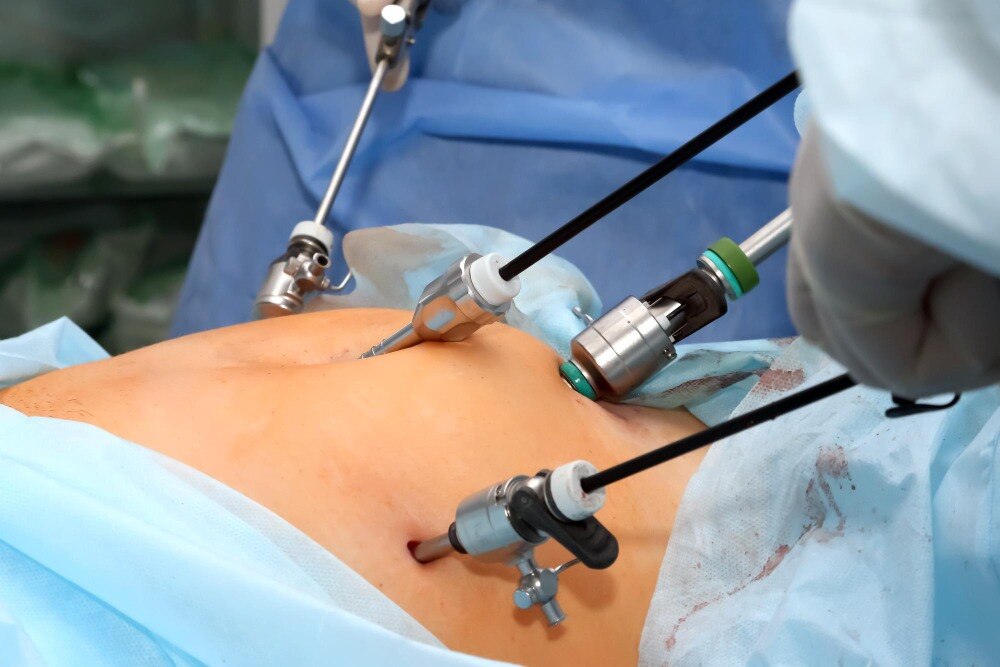
The practical difference in laparoscopy versus open surgery is the route into your abdomen. Laparoscopy uses several small cuts, a camera and instruments, with carbon dioxide filling the abdomen to create working space. Open surgery, or laparotomy, uses one larger abdominal incision so the surgeon works directly through it.
| Option | What changes for you | Typical practical effect |
|---|---|---|
| Laparoscopy | Small incisions and camera-guided instruments | Less wound pain, smaller scars and often less blood loss |
| Open surgery | Larger incision across or down the abdomen | More abdominal-wall pain, a longer wound-healing period and a more visible scar |
| Anaesthesia | Both usually require general anaesthesia | You are asleep for either approach; laparoscopy also involves carbon dioxide insufflation |
| Hospital stay | Laparoscopy often allows earlier discharge | Complex procedures still need an overnight or longer admission |
| Recovery | Laparoscopy usually limits muscle and skin injury | Walking and normal activities often resume sooner than after laparotomy |
| Access | Open surgery gives immediate hand access and room for large specimens | It can offer better control during severe bleeding or extensive disease |
A “keyhole” operation is not automatically minor. You may need a catheter, drain, overnight monitoring or an incision enlarged to remove a uterus, fibroid or ovarian mass. If bleeding, adhesions, organ injury or unexpected disease makes safe completion difficult, the surgeon can convert laparoscopy to open surgery during the same anaesthetic.
The choice depends on the condition, anatomy, previous operations, urgency and available expertise—not the hospital’s location.
Which gynaecological operations suit each approach?
Hysterectomy for benign disease often suits laparoscopy when the uterus, fibroids and surrounding anatomy can be managed safely through small incisions. Vaginal hysterectomy is another option and may avoid abdominal incisions altogether.
| Operation | Laparoscopic route suits | Open surgery offers better control when |
|---|---|---|
| Hysterectomy | Benign disease, a manageable uterus and no extensive adhesions | The uterus or mass cannot be removed safely, anatomy is severely distorted, or major bleeding requires rapid access |
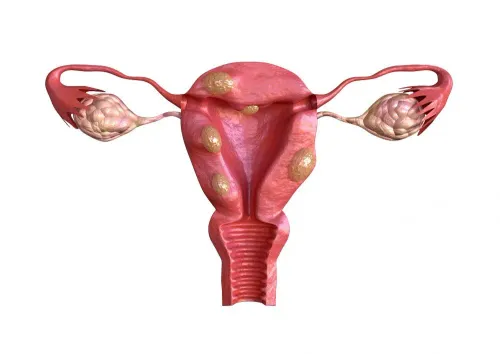
| Myomectomy | A limited number of fibroids with accessible positions, especially when fertility preservation is planned | Numerous, very large or deeply embedded fibroids make reconstruction or specimen removal difficult |
| Ovarian cyst removal | A cyst appears benign, can be separated from the ovary and can be removed without spillage | The mass is very large, fixed by adhesions, suspicious for cancer or requires intact removal |
A large uterus, fibroid or ovarian mass does not automatically require laparotomy. Size, location, adhesions, previous operations, suspected diagnosis and the surgeon’s experience decide whether laparoscopic gynaecological surgery in Mumbai is appropriate.
Known or suspected cancer changes the plan. Uncontained power morcellation can spread an unsuspected uterine cancer; ask how tissue will be removed and whether an open operation is safer. Dense adhesions, uncontrolled bleeding or injury risk can also require conversion to open surgery during the procedure.
A laparoscopic operation therefore needs immediate open-surgery capability, not just keyhole equipment.
How your medical details determine the surgical route
The decision starts with the disease, not the city. Your surgeon should review imaging, pelvic examination findings, uterus or tumour size, location, suspected cancer, blood count and other conditions that affect anaesthesia or healing. Prior abdominal operations can create adhesions that make keyhole access difficult.
Assess these details together:
- Previous caesarean sections or abdominal surgery, bowel disease and known adhesions
- Severe anaemia, bleeding risk, heart or lung disease, obesity and ability to tolerate general anaesthesia and carbon dioxide insufflation
- The operation’s urgency, available instruments, surgeon’s experience and immediate access to open surgery
- Fertility plans: ovarian tissue, fallopian tubes and uterine muscle can affect future fertility regardless of incision size
- Pregnancy status: medically necessary surgery should not be delayed solely because you are pregnant, while elective procedures are usually postponed until after delivery with pregnancy-specific anaesthetic and monitoring plans
| Route | Often considered when | What changes the decision |
|---|---|---|
| Laparoscopic | Disease is localised, anatomy is suitable and the patient is stable | Dense adhesions, uncontrolled bleeding, unexpected anatomy or difficult specimen removal may require conversion |
| Open abdominal | The uterus or mass is very large, disease is extensive, cancer is suspected or bleeding is severe | A larger incision brings more pain, wound care and recovery time |
| Vaginal | A hysterectomy can be completed safely through the vagina | Uterine size, pelvic anatomy and the need to inspect or treat upper-abdominal disease may rule it out |
Ask whether the facility can convert immediately if needed. That safety option matters when weighing laparoscopic surgery versus open surgery in Mumbai.
Conversion, complications and trade-offs you must discuss
A laparoscopic operation becomes open surgery when continuing through small ports is less safe than making a larger abdominal incision. Conversion is a planned safety option, not necessarily a failed operation.
| Laparoscopy versus open surgery | Laparoscopy | Open surgery |
|---|---|---|
| Access and view | Small ports, camera, carbon dioxide; magnified view | One larger incision; direct access for extensive disease |
| Anaesthesia | Usually general anaesthesia | Usually general anaesthesia |
| Recovery | Less pain and blood loss on average; shorter hospital stay and earlier activity | More wound pain; longer stay and recovery |
| Trade-offs | Port-site bleeding, hernia, carbon dioxide effects and specialised equipment | Wound infection, incisional hernia, more scarring and greater adhesion risk |
Your surgeon may convert because of:
- Uncontrolled bleeding or an injury to the bowel, bladder or ureter
- Dense adhesions from previous operations or infection
- Unexpected anatomy, very large fibroids or extensive disease
- A specimen that cannot be removed safely through a port
- Findings that raise concern for cancer
Both routes carry risks from bleeding, infection, blood clots, anaesthesia and injury to nearby organs. Open surgery adds a larger wound and slower return to normal activities; laparoscopy adds port-related complications and requires equipment and staff able to manage an emergency conversion.
Ask how the facility would handle a major bleed and whether open surgery can begin immediately. For hysterectomy, vaginal surgery is a third route that may avoid both abdominal approaches.
If future pregnancy matters, discuss how removing or cutting tissue from the uterus, ovary or fallopian tube could affect fertility; the operation itself matters more than the incision size.
Questions to ask before choosing a Mumbai surgical facility
Before scheduling minimally invasive surgery in Mumbai, obtain clear answers about the named procedure, the surgeon’s experience with it, and the facility’s response if the plan changes.
For laparoscopic surgery versus open surgery in Mumbai, ask whether vaginal surgery is also suitable for a hysterectomy and why the recommended route is safest for your anatomy, diagnosis and fertility plans.
- Who will operate, how often do they perform this procedure, and who covers them if an urgent decision is needed?
- Who provides general anaesthesia, and how will they manage your medical conditions, carbon dioxide insufflation and postoperative pain?
- Can the facility immediately control major bleeding, repair bowel or urinary-tract injury, and convert to laparotomy without transferring you?
- How will the uterus, fibroid or ovarian mass leave the body? Ask whether it needs an enlarged incision, vaginal removal or contained extraction, especially if cancer is possible.
- How many nights, drains or a catheter should you expect, and what activity limits apply?
- Who receives your pathology report, when will you get it, and whom do you call for fever, worsening pain, heavy bleeding or wound problems?
Ask Dr.Vinisha Abhale -Obs & Gynaecologist to record the conversion plan, specimen plan and follow-up schedule in your consent discussion, rather than relying on the phrase “minimally invasive surgery.”
| Checkpoint | Confirm | Warning sign |
|---|---|---|
| Surgeon | Named operator and relevant experience | Sales staff cannot answer |
| Anaesthesia | Anaesthetist and recovery monitoring | No clear contact |
| Emergency support | Immediate conversion and repair capability | Transfer is the only plan |
| Recovery | Procedure-specific estimate | “Same day” is promised automatically |
Related service
Laparoscopic Surgery also known as minimally invasive or keyhole surgery, is a modern surgical technique in which operations are performed through small incisions using a... View service → |
Frequently asked questions
How do laparoscopy and open surgery differ in practical terms?
Laparoscopy uses several small incisions, a camera, instruments and carbon dioxide to create working space. Open surgery, or laparotomy, uses one larger abdominal incision for direct access.
Which gynaecological operations suit laparoscopy or open surgery?
The suitable route depends on the operation, the size and location of the condition, disease spread, previous surgery and the surgeon’s assessment. Some procedures can use either approach.
How do my medical details determine the surgical route?
Your diagnosis, previous abdominal operations, scar tissue, body health, anaesthesia risk and the complexity or size of the condition help determine whether laparoscopy or open surgery is safer.
What should I ask about conversion and complications?
Ask when the surgeon would convert laparoscopy to open surgery, which complications are possible, how they are managed, expected recovery time and the facility’s emergency support.
Keywords