Heavy bleeding, infertility, repeated miscarriage or an abnormal ultrasound can point to a problem inside the uterine cavity, but hysteroscopy is not the right test for every pelvic or fertility concern. You will be able to match symptoms and test results to the appropriate hysteroscopy type, prepare safely, understand recovery and compare Mumbai facilities by the care they actually provide.
Key takeaways
- Ask why hysteroscopy is needed and whether ultrasound findings explain your symptoms.
- Confirm whether the facility offers diagnostic, operative and biopsy-guided hysteroscopy.
- Discuss local or general anaesthesia, fasting, medicines and same-day discharge.
- Seek urgent care for heavy bleeding, fever, severe pain or fainting after hysteroscopy.
When do symptoms or test results justify hysteroscopy?
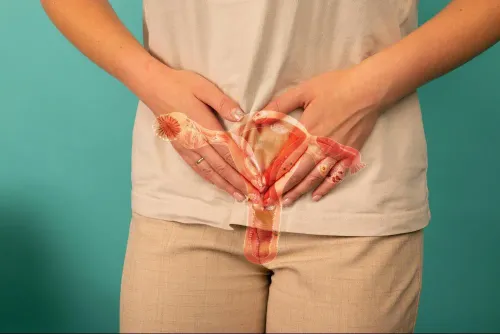
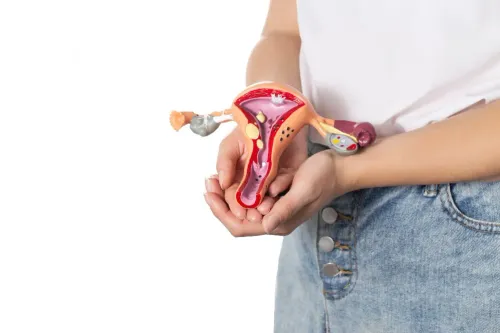
Heavy or irregular bleeding, suspected endometrial polyps or submucosal fibroids, infertility, repeated miscarriage, retained tissue after pregnancy, or an abnormal ultrasound or saline-infusion sonogram can justify hysteroscopy. It directly examines the cervical canal and uterine cavity for polyps, submucosal fibroids, intrauterine adhesions (Asherman syndrome), retained tissue and some uterine septa.
A fibroid mainly within the uterine muscle or outside the uterus is different; it may require medication, another procedure or surgery. Hysteroscopy does not test tubal patency, examine the ovaries or diagnose most pelvic pain arising outside the cavity.
| Test | What it shows | Important limitation |
|---|---|---|
| Transvaginal ultrasound | Initial view of the uterus and lining | May not define a cavity lesion clearly |
| Saline-infusion sonography | Saline outlines the uterine cavity | It does not remove or biopsy the lesion |
| Endometrial biopsy | Tissue for laboratory examination | Samples tissue without seeing the lesion |
| Dilation and curettage | Scrapes tissue from the cavity | Blind curettage can miss a focal polyp or fibroid |
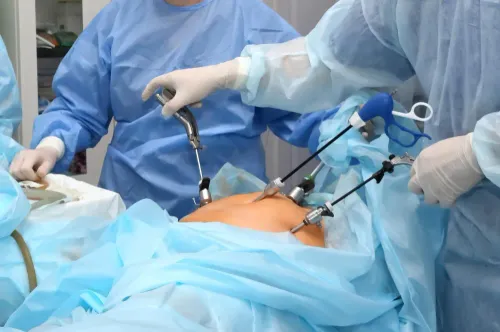
| Laparoscopy | Outside of the uterus, ovaries and tubes | Does not inspect the cavity from inside |
Hysteroscopy can therefore be diagnostic, biopsy-guided or operative, depending on the finding. It is not a universal infertility treatment: additional fertility testing or imaging may be needed. Choose hysteroscopy options in Mumbai according to the suspected abnormality and the facility’s equipment, anaesthesia, fluid monitoring and pathology pathway—not location alone.
What is the difference between diagnostic, operative and biopsy-guided hysteroscopy?
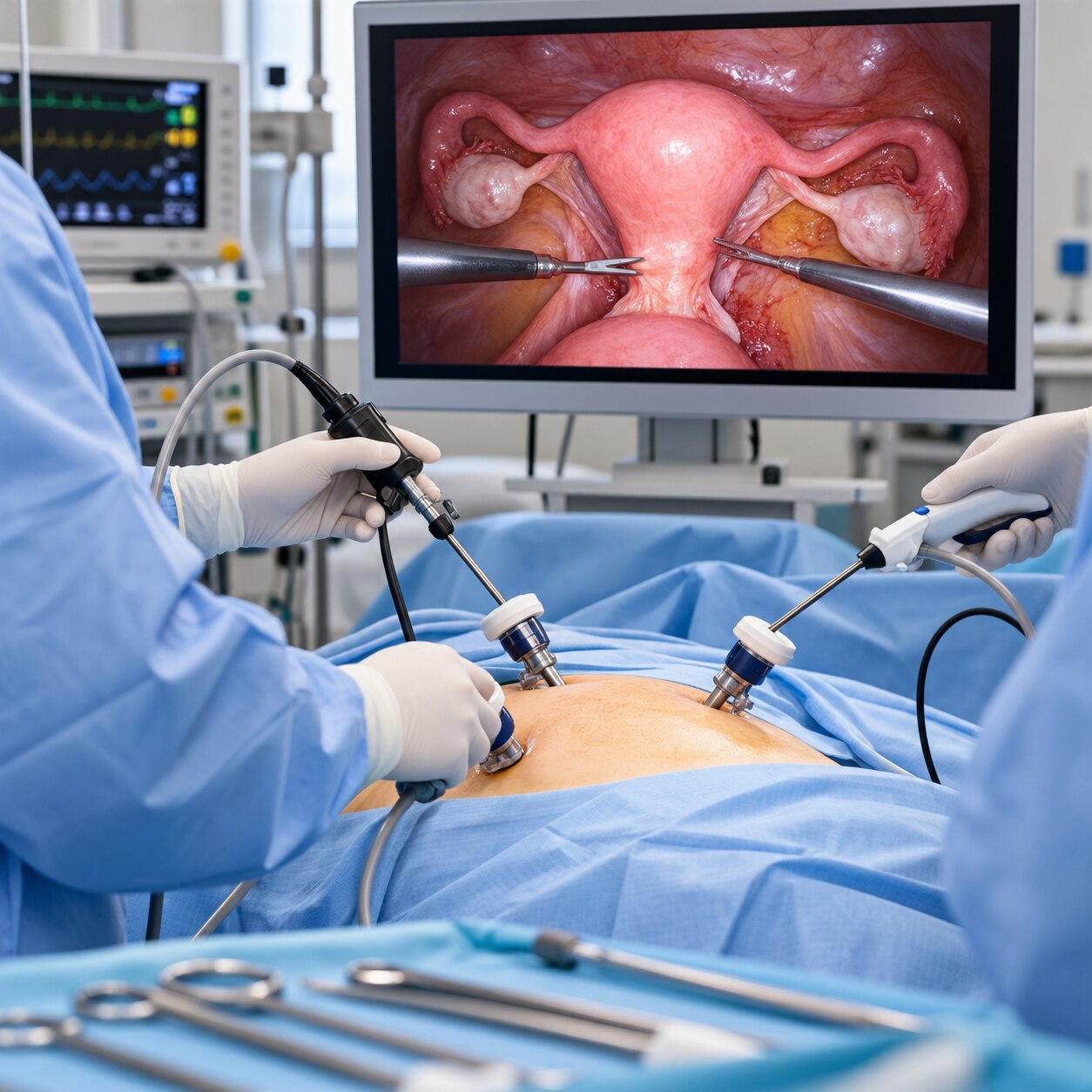
The difference is the purpose of the procedure. In all three, the clinician passes a hysteroscope through the vagina and cervix, expands the uterine cavity with sterile saline, and views the cervical canal and cavity through a camera.
| Option | What happens | Main purpose |
|---|---|---|
| Diagnostic hysteroscopy | The clinician inspects the cavity but does not remove tissue. | Find polyps, submucosal fibroids, adhesions, retained tissue or some septa. |
| Hysteroscopy-guided biopsy | An instrument passes through the scope to sample a specific suspicious area for histopathology. | Obtain a targeted sample, rather than relying on blind sampling. |
| Operative hysteroscopy | Instruments passed through the scope remove or treat a finding during the same procedure. | Treat a polyp, selected submucosal fibroid, adhesions, retained tissue or some septa. |
Before booking hysteroscopy treatment in Mumbai, ask:
- Can the doctor convert the procedure from diagnosis to treatment if a suitable lesion is found?
- Does that require separate consent?
- Will the fee change if instruments, anaesthesia, theatre time or pathology are added?
A larger lesion, dense adhesions or a fibroid mainly within the uterine wall may need staged treatment, a different operation or referral to another facility.
Hysteroscopy is not automatically a fertility treatment. Its value depends on finding a cavity abnormality that plausibly affects bleeding, implantation or pregnancy; it will not correct every cause of infertility.
How should you prepare for the procedure and choose the anaesthetic setting?
Outpatient hysteroscopy suits diagnosis and selected small treatments; an operating theatre is safer for more painful, complex or extensive work. A small hysteroscope, sometimes inserted using a vaginoscopic approach without a speculum, may allow local anaesthesia or no anaesthesia.
Sedation or general anaesthesia may suit operative treatment, difficult cervical access, extensive adhesions, marked anxiety or a previous painful experience.
| Setting | Anaesthetic | Common fit |
|---|---|---|
| Outpatient clinic | None or local anaesthesia | Diagnostic viewing or selected small treatment |
| Outpatient clinic with sedation | Sedation, with monitored recovery | Anxiety, pain concerns or a procedure needing greater comfort |
| Operating theatre | Sedation or general anaesthesia | Operative work, difficult access, extensive adhesions or complex treatment |
Ask a hysteroscopy doctor in Mumbai which setting is planned and whether the procedure can stop if pain, anxiety or complexity makes outpatient treatment unsuitable.
Before attending:
- Complete a pregnancy test when relevant. Hysteroscopy is usually postponed for a known or suspected pregnancy.
- Give the team a full medication list. Ask for specific instructions before changing warfarin, apixaban or aspirin; do not stop them independently.
- Report fever, foul-smelling discharge, pelvic pain or other infection symptoms. Active pelvic infection requires treatment before hysteroscopy.
- Ask exactly when to stop eating and drinking if sedation or general anaesthesia is planned.
- Arrange an escort home after general anaesthesia and do not drive for the period advised by the anaesthesia team.
- Tell the clinic about unexpected bleeding, possible pregnancy and allergies. Timing is often after menstruation, but follow the exact date plan the clinic provides.
What will recovery feel like, and which symptoms are urgent?
After an uncomplicated outpatient hysteroscopy, expect period-like cramps, light bleeding or watery discharge for a short time. Many people return to desk-based work the same day or the next day.
| Setting | Likely recovery | Practical expectation |
|---|---|---|
| Outpatient diagnostic | Mild cramps and light discharge | Resume routine when comfortable |
| Operative hysteroscopy | More soreness or bleeding | Allow longer recovery if tissue was removed |
| General anaesthesia | Grogginess and temporary restrictions | Arrange an escort and follow the anaesthesia team’s driving advice |
Use the prescribed or recommended pain relief. Avoid sex, tampons and swimming until bleeding stops, or until your treating team gives a specific time limit.
Compare these risks before consenting:
- Infection, heavy bleeding, cervical injury or uterine perforation
- Anaesthetic complications and fluid overload
- Incomplete treatment, especially with a large lesion, dense adhesions or a fibroid within the uterine wall
The clinician reduces risk by viewing the cervix and cavity directly, expanding the cavity with sterile saline, tracking fluid inflow and outflow, and stopping or changing the procedure when the fluid deficit reaches the safety threshold. Removed or sampled tissue should be sent for histopathology.
Seek urgent medical advice for severe or worsening pain, heavy bleeding, fever, faintness, shortness of breath or foul-smelling discharge. A normal-looking cavity does not exclude every cause of abnormal bleeding, so follow-up interpretation alongside symptoms, imaging and pathology still matters.
How can you compare hysteroscopy facilities in Mumbai?
A practical comparison starts with the operator and the backup plan, not the postcode. A hysteroscopy doctor in Mumbai should explain whether diagnosis can become operative treatment, what consent and extra cost that creates, and what happens if the finding cannot be treated there.
Use this checklist for a hysteroscopy clinic near Lower Parel:
- Ask who will perform the procedure and how often they perform operative hysteroscopy.
- Confirm that the scope and instruments suit the suspected polyp, submucosal fibroid, adhesions or other lesion.
- Ask whether local anaesthesia, sedation and general anaesthesia are available, and who decides between them.
- Ask how saline inflow and outflow are recorded, and what fluid-balance limit stops the procedure.
- Confirm where emergency treatment is available if heavy bleeding, perforation or another complication occurs.
- Ask how removed tissue reaches the histopathology laboratory, who reviews the report and when you receive it.
- Ask what happens if the procedure is incomplete, needs staging or requires hospital escalation.
Compare the complete quotation, not the headline fee.
| Cost item | Confirm whether it is included |
|---|---|
| Consultation, imaging and pregnancy testing | Included or separate |
| Anaesthesia, theatre and disposable instruments | Included or separate |
| Pathology, medicines and follow-up | Included or separate |
For uterine problem treatment in Mumbai, compare expected benefit, alternatives, same-session consent and the next step if hysteroscopy cannot address the finding. Dr.Vinisha Abhale -Obs & Gynaecologist is one local option for discussing whether hysteroscopy fits your symptoms and test results; it is not necessary for every patient.
Related service
Hysteroscopy Hysteroscopy by Dr. Vinisha Abhale Hysteroscopy is an advanced, minimally invasive procedure used to examine and treat problems inside the uterus without any... |
Frequently asked questions
When do symptoms or test results justify hysteroscopy?
Hysteroscopy can directly examine the cervical canal and uterine cavity when you have heavy or irregular bleeding, suspected polyps or submucosal fibroids, infertility, repeated miscarriage, retained pregnancy tissue, or an abnormal ultrasound or saline-infusion sonogram.
What is the difference between diagnostic, operative and biopsy-guided hysteroscopy?
Diagnostic hysteroscopy looks for abnormalities. Operative hysteroscopy treats findings such as polyps, submucosal fibroids, adhesions or retained tissue during the same procedure when appropriate. Biopsy-guided hysteroscopy removes or samples suspicious tissue for laboratory examination.
How should you prepare for hysteroscopy and choose the anaesthetic setting?
Ask whether you need fasting, which medicines to stop or continue, and whether pregnancy testing is required. Choose the setting based on the planned procedure, expected discomfort, medical history and whether local, regional or general anaesthesia is appropriate.
What does hysteroscopy recovery feel like, and which symptoms are urgent?
Mild cramping, spotting and tiredness can occur after hysteroscopy. Contact the treating facility urgently for heavy bleeding, fever, worsening or severe abdominal pain, foul-smelling discharge, fainting or breathing difficulty.
How can you compare hysteroscopy facilities in Mumbai?
Compare the doctor’s experience with your specific uterine problem, the facility’s diagnostic and operative equipment, biopsy and pathology arrangements, anaesthesia support, emergency access, itemised fees and follow-up plan. Ask whether the procedure is available near your preferred area, including Lower Parel.
Keywords